
About Plymouth Congregational Church
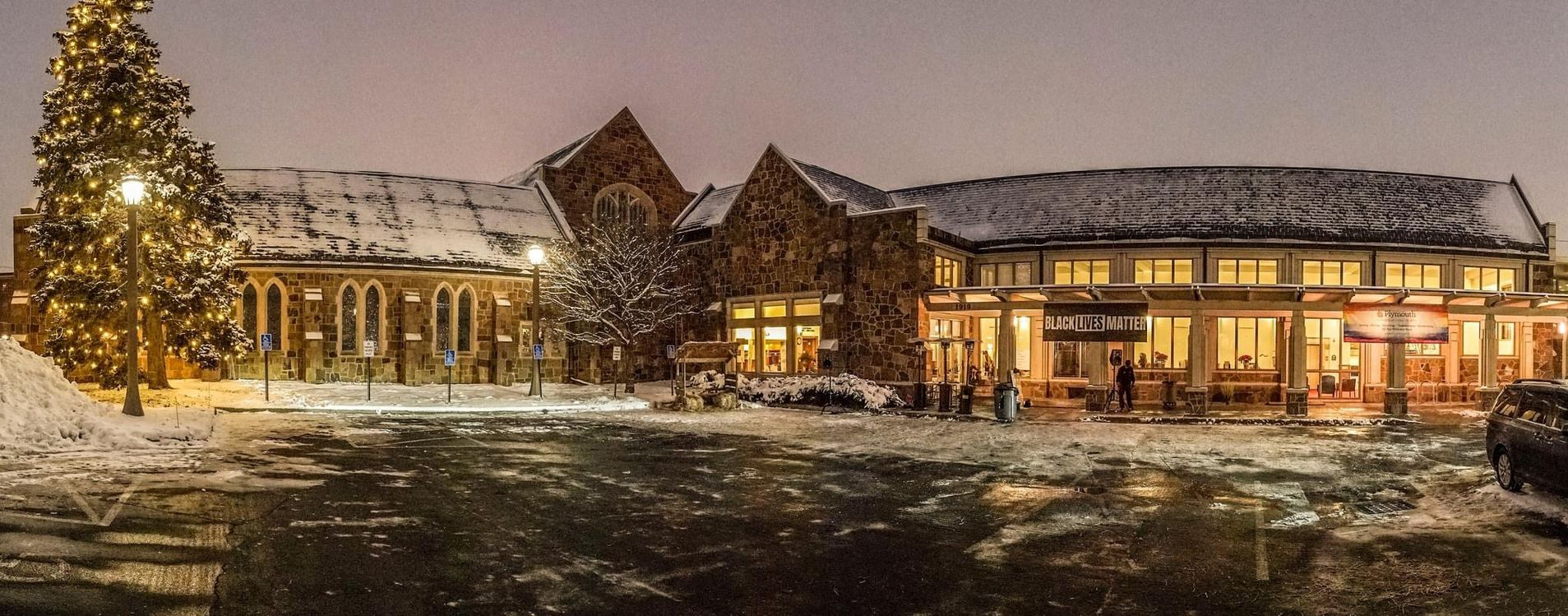
Plymouth Congregational Church is a progressive faith community grounded in the Christian tradition. Questions are welcome here. Faith is practiced rather than prescribed. Whoever you are, whatever you believe or doubt, you are invited to belong.
We have been part of Minneapolis since 1857 — older than the city's parks, its bridges, most of its churches. For nearly all of those years we have stood at 1900 Nicollet, on ground where four neighborhoods meet, each with its own character and its own claim on the corner. That location is not incidental. A church shaped by its neighbors is a different church than one shaped only by itself, and Plymouth has been shaped — by this street, this city, and the people who walk past every day.
What that has made us is a congregation that takes the world seriously: its beauty, its music and art, its injustices, its neighbors in need. Come see for yourself. There is a seat.
Our History
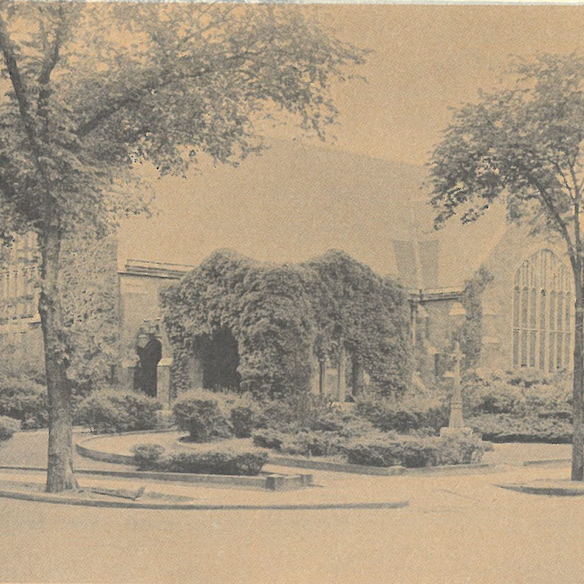
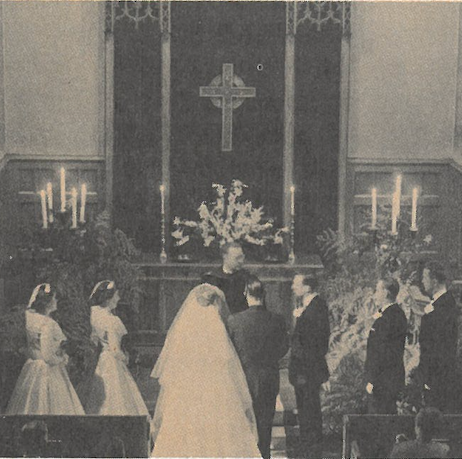
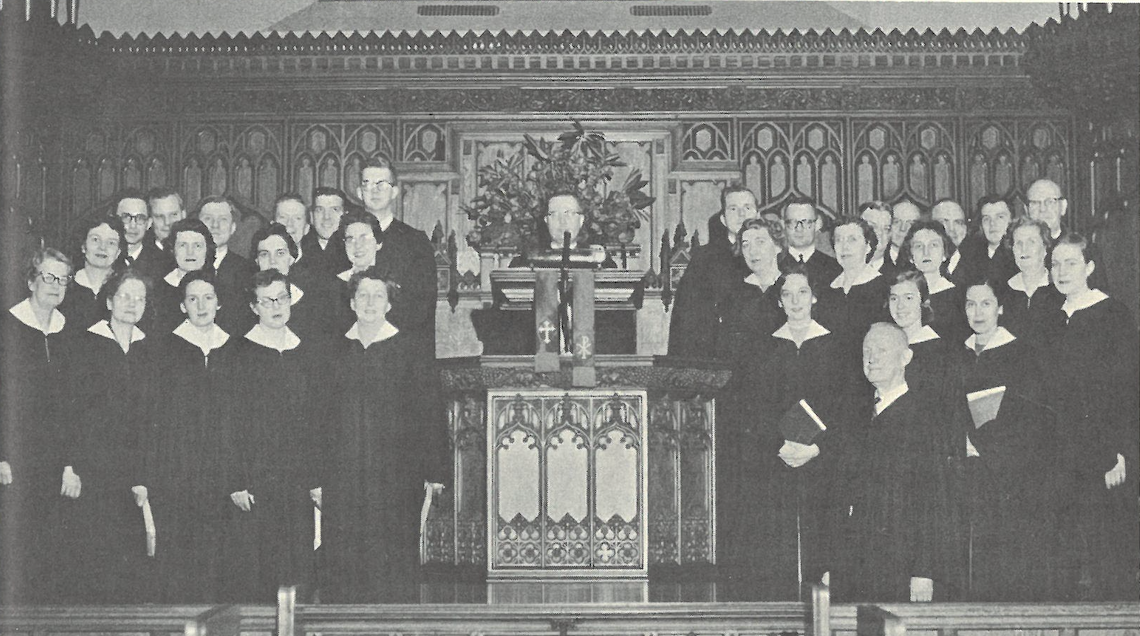
Plymouth is as old as Minneapolis. We were founded in April 1857 by 18 people who believed faith required action — and proved it almost immediately. In 1858, the congregation fired its first minister for not taking a strong enough stand against slavery.
That instinct has shaped us ever since. Plymouth founded what is now the Groveland Food Shelf. We helped launch what became Beacon Interfaith Housing Collaborative, which today provides supportive housing across the Twin Cities. We have been part of the fabric of this city — and its conscience — for more than 165 years.
Fast Facts
- Plymouth has been a church as long as Minneapolis has been a city.
- We are progressive, independent, and Christian — and we hold those three things together.
- We are affiliated with, but not members of, the United Church of Christ.
- We are members of the National Association of Congregational Christian Churches.
- We have no dogma or creed. We are bound by covenant.
- It is genuinely easy to get involved and find your place here.
What We Believe

Within
We find sanctuary for the spiritual journey in the Congregational tradition. We seek the sacred in ourselves and in others, cultivate our capacity for love, and live in the hope of renewal and transformation.

Among
We walk together in community. We care for one another, honor many pathways to the sacred, and nurture a culture of genuine welcome.

Beyond
We put faith to work. We invest our time, talent, and treasure in service to people in need — advancing human rights and social, economic, racial, and environmental justice.
Who We Are
We are a community of seekers, families, and neighbors drawn together by shared values rather than shared doctrine. At Plymouth, there is no creed you must accept, no belief you must hold. We are bound by covenant — a mutual commitment to walk together, care for one another, and put our faith to work in the world.
We are Christian and Congregational, which means our congregation governs itself. No outside authority tells us how to worship, who to welcome, or what to believe. That independence has allowed us to be on the right side of history more than once — and to keep trying.
All people are welcome at Plymouth: individuals and families of any sexual orientation, gender identity, race, national origin, socioeconomic status, age, mental or physical health, or ability.
Where We Are
Plymouth sits at a rare kind of intersection. Our building at 1900 Nicollet occupies the meeting point of four Minneapolis neighborhoods — Stevens Square, Whittier, the Wedge, and Ventura Village — each with its own distinct character.
We are walkable, transit-accessible, and genuinely embedded in the fabric of south Minneapolis. The communities around us are diverse, creative, and rooted, and that context is not incidental to who we are. It shapes us.
Plymouth has been a presence on Nicollet since 1909. It is a landmark, a gathering place, and a working church.